
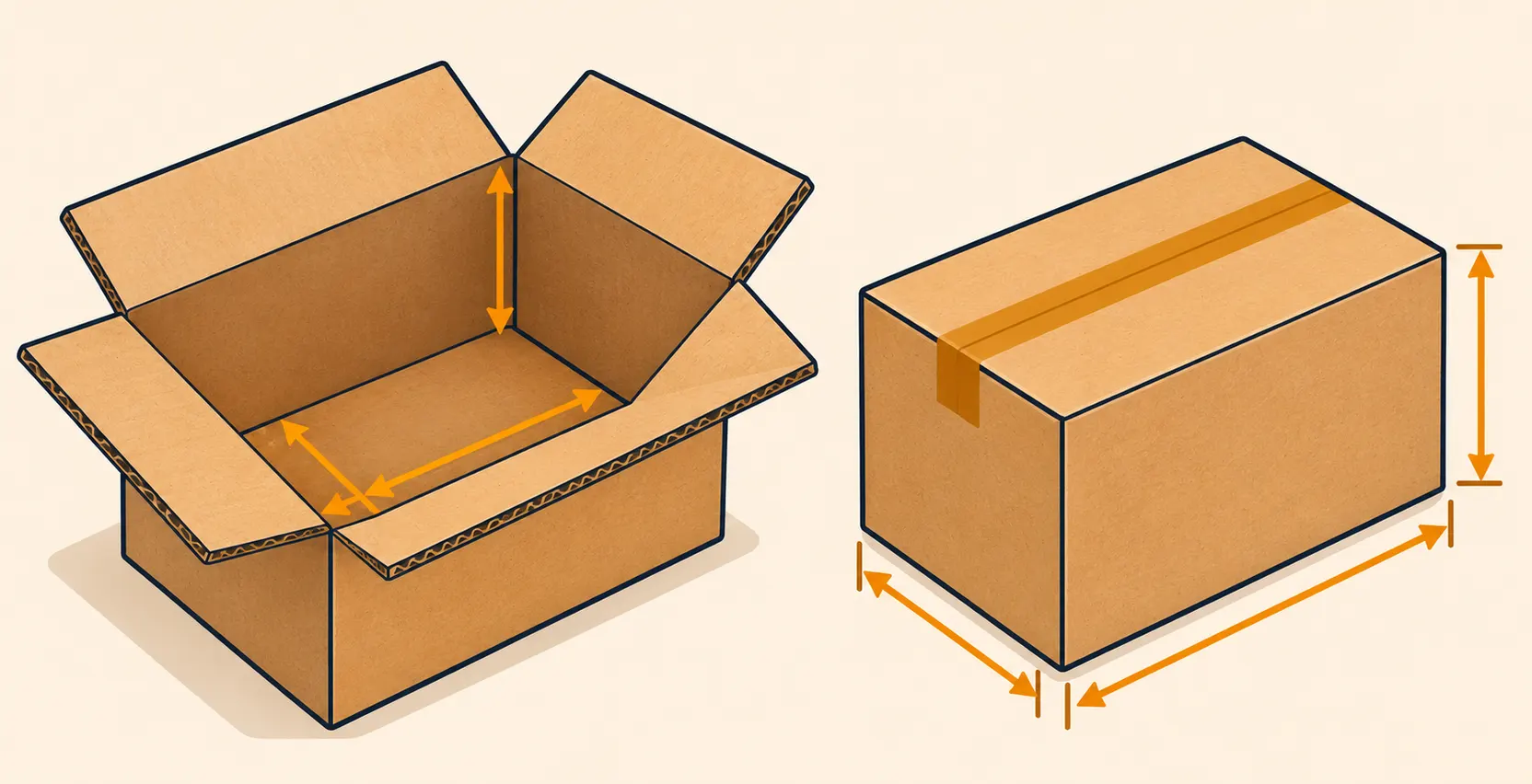
Measure the inside of an assembled box to see what will fit. Measure the outside of a closed, packed box to see how much space it will take in transit. Write down both sets of numbers and label them clearly.
Measure the opening first
Set up the carton and close the bottom as you would when packing. At the open top, measure the longer inside edge for length and the shorter inside edge for width. Measure from the inside bottom up to the opening for height. Leave the flaps out of the height measurement. List the numbers in that order and include the units.
If you only have a box that has been flattened, ask the supplier for the assembled dimensions or set the box up before measuring. A flat panel measured between folds is a different reference and can lead to an incorrect order.
Make room for the whole packed item
Measure the product with the padding, inserts or dividers you plan to use. For example, an item that measures 10 by 7 by 3 inches may occupy 12 by 9 by 5 inches after padding. Use the larger measurement as the starting point for checking samples. The amount of clearance needed depends on how the item is packed and protected.
Put the wrapped item into a sample and close the box. Check that the flaps meet as intended, the sides stay flat and the item does not shift more than you expect. If a tight carton slows down packing, note where the packer needs more room. Ask about tolerances before treating a fit on one sample as proof that every carton will fit.
Measure the outside before comparing delivered cost
Measure the closed, filled carton at its widest points. If the sides bow outward, include that extra space. Use those dimensions for checking shelf space or getting a parcel estimate. For a bulk order of empty cartons, ask for flat bundle dimensions, gross weight and cartons per bundle. Those figures help you compare delivery costs for the empty cartons you are buying.
A useful quote request might read: “Please quote 500 and 1,000 cartons with inside dimensions of 12 by 9 by 5 inches. Confirm the outside dimensions, board specification, bundle count and delivery terms.” Add the packed weight and your ZIP code. If your operation has a strict outside size limit, include it as a separate requirement.
When a stock carton almost fits
Try the same packing routine your warehouse will use. Place the wrapped item inside, insert any paperwork, close the flaps and check for bulging. If the item only fits when you press hard on the sides, record where it catches. A larger carton might help, but first test whether changing the orientation or insert can solve the problem without increasing the outside size.
Compare a stock carton with a custom size
Compare the two options with the same packed product and protection. For example, a stock carton may cost less to buy but need more fill material. A custom carton may save packing space but come with a minimum order or setup charge. Ask for the carton price, bundle count and delivery cost separately. Include your estimated monthly usage so you can decide whether any savings justify stocking another size.
Record what passed the sample check
Use a simple record: item and orientation, padding used, inside measurements, loaded outside measurements, packed weight and box reference. If multiple people pack the item, have another person repeat the trial. Save the approved sample reference beside the quote so receiving staff can check the first delivery against the same dimensions.
Sources
Uline box dimensions, Great Little Box Company measurement guide.